
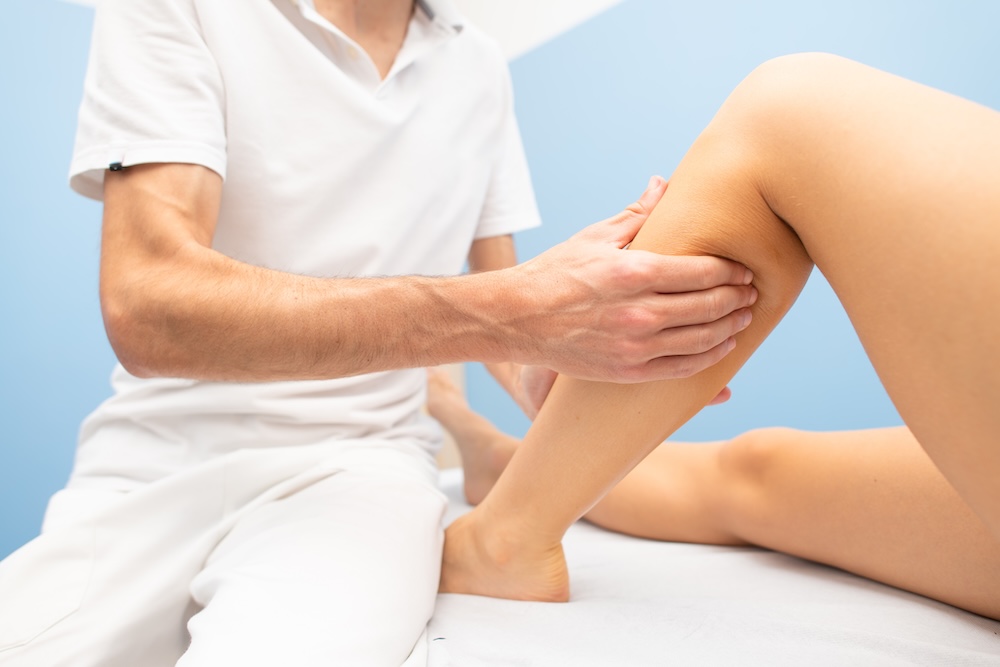
Athletes rarely break down all at once. The hamstring that tears in the third quarter has been tightening for weeks, and the shoulder that quits on a swimmer has been compensating since spring. Soft tissue work catches those problems while they are still small, which is why massage sits alongside adjustments in the care plans built at Hometown Chiropractic. Done consistently, it restores range of motion that hard training quietly takes away and puts trained hands on an athlete often enough to notice a change before it becomes a diagnosis.
How does massage actually lower an athlete’s injury risk?
Massage lowers injury risk primarily by restoring range of motion and breaking up adhesions, the disorganized bands of scar-like tissue that form when muscle and fascia are loaded repeatedly without full recovery. A 2020 systematic review in BMJ Open Sport and Exercise Medicine found sports massage produced consistent gains in flexibility and reductions in delayed onset muscle soreness, while showing little direct effect on strength or sprint output.
Range of motion is the part that matters here. Most non-contact strains happen at end range under fatigue, when a shortened muscle gets asked to lengthen fast. A quadriceps that has lost fifteen degrees of hip extension over a season is not a comfort problem, it is a hamstring waiting to fail. The assessment built into a session also catches asymmetry, a hip that no longer rotates evenly or a calf that feels ropey on one side only, weeks before it announces itself.
When in a training week should an athlete book a massage?
Deep soft tissue work belongs 48 to 72 hours before competition, never the day of. Pressure heavy enough to change tissue creates minor inflammation and temporary soreness, and athletes worked on the night before a race often feel flat.
A workable schedule:
- Heavy or deep work: two to three days out from an event, or on a recovery day
- Pre-event flush: 10 to 15 minutes of light, brisk work within an hour of warmup, meant to stimulate rather than relax
- Post-event recovery: 24 to 48 hours after the effort, when the worst of the swelling has settled
Delayed onset muscle soreness typically peaks 24 to 72 hours after unaccustomed work, and a 2018 meta-analysis in Frontiers in Physiology by Dupuy and colleagues found massage outperformed cold water immersion, compression, and active recovery for reducing soreness and inflammatory markers in that window.
What happens during a sports massage visit at Hometown Chiropractic?
A sports-focused visit is an evaluation first and a treatment second. Expect a short intake about training load and pain history, a movement check of the joints above and below the complaint, then 30 to 60 minutes of hands-on work aimed at what the screen found rather than a full-body routine on autopilot.
Techniques vary with the goal. Light flushing moves fluid and calms an irritated area. Cross-friction and trigger point work address a specific knot or a thickened tendon attachment. Active release, where the athlete moves the limb while pressure is held, reaches adhesions between muscle layers that stay stuck under passive pressure. Most sessions end with homework, usually a stretch held long enough to matter and a loading exercise for whatever tested weak.
Coordinating soft tissue work with adjustment is the practical advantage of getting both under one roof. A joint restricted for months is surrounded by muscle guarding it, and the adjustment holds far better once that tissue is released first.
Does massage make athletes faster or stronger?
Not directly, and any provider claiming otherwise is overselling. The performance benefit is indirect and comes from training availability: an athlete who recovers faster tolerates more quality work, and volume is what drives adaptation.
There is real physiology behind the recovery claim. A 2012 study in Science Translational Medicine by Crane and colleagues found that ten minutes of massage after damaging exercise reduced inflammatory signaling and raised markers of mitochondrial growth in biopsied muscle. That is a recovery mechanism, not a performance enhancer, and the distinction is worth keeping straight.
How often should you go, and what does it cost?
In-season athletes do well with a session every one to two weeks; off-season and recreational athletes usually maintain on a monthly schedule. Hourly rates for sports and clinical massage in the United States commonly run $70 to $130 depending on region and session length.
Standalone massage is rarely covered by insurance, though it is more often billable when delivered as part of a documented treatment plan for a specific injury. It generally qualifies as an eligible HSA or FSA expense with documented medical necessity. Check your own plan before assuming coverage.
Massage will not replace sleep, protein, or a sane training progression, but it reaches something none of those can: tissue that has already changed. If a nagging tightness has outlasted your stretching routine, or you want to get ahead of it before the season starts, Hometown Chiropractic can assess what is actually restricted and build a plan around it. Schedule an evaluation and bring your training calendar.