
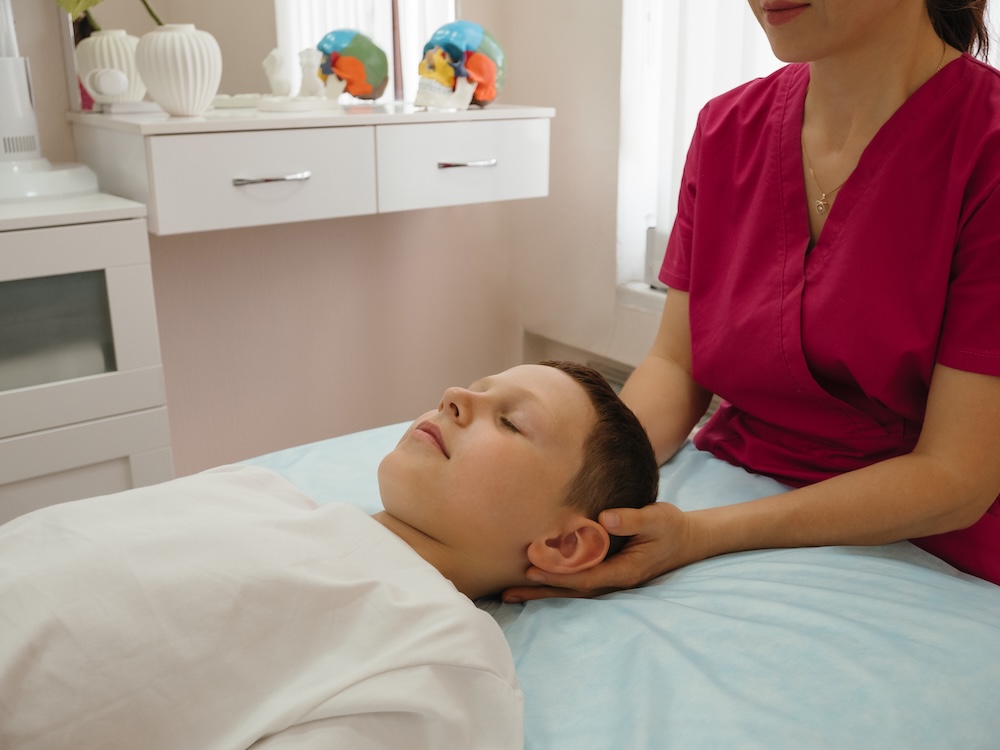
A child’s spine is still growing, and the posture, sports and backpack habits kids build now carry into adulthood. At Hometown Chiropractic in Cheyenne, we see kids for back and neck pain, sports strains and posture concerns, using gentle, low-force techniques sized for a smaller body. Not every child needs chiropractic care, but problems like a spinal curve or a lingering sports injury are easier to manage when caught early.
Why does spine health matter so much in childhood?
The spine does much of its growing during childhood and the teen years, and growth plates in the vertebrae stay open into the late teens or early twenties. During that window, repeated stress from heavy bags or long hours bent over a phone can shape how the back develops.
Injuries can stick too. Dr. Ryan Walton saw this firsthand. A low back injury playing football in eighth grade is what first led him to chiropractic.
Is chiropractic care safe for kids?
For most children, gentle chiropractic care is low risk when it starts with a proper exam and uses techniques adjusted for their size. Reviews of the research have found serious side effects to be rare, though the number of high-quality studies in children is still small. Mild soreness after a visit is the most common reaction.
Pediatric adjustments use far less force than adult ones. For a child, that can mean fingertip pressure or an instrument that delivers a light, controlled impulse instead of the twisting moves many parents picture.
A first visit usually starts with a health history and a conversation with the parent, followed by a posture and movement exam. We look at how the child stands and moves before suggesting any care. If something points to a problem outside our scope, we refer to your pediatrician.
What signs suggest a child should see a chiropractor?
A chiropractic exam makes sense when a child has back or neck pain that keeps coming back, or posture changes you can see. Common examples include:
- One shoulder or hip sitting higher than the other
- A sore back after carrying a backpack all day
- Neck stiffness or headaches after long sessions on a phone or tablet
- A sports strain that keeps flaring up
When should you call the pediatrician first?
Some back pain in children needs a medical workup before anything else. Call your child’s doctor if the pain wakes them at night, comes with fever or weight loss, follows a hard fall or crash, or brings numbness, weakness or trouble with bladder or bowel control. Back pain in a child under age 4 also deserves a medical look first.
Which everyday habits protect a child’s spine?
The biggest daily factors are how kids carry their load and how they sit.
How heavy should a backpack be?
The American Academy of Pediatrics recommends a backpack weigh no more than 10 to 20 percent of a child’s body weight. For a 70-pound fourth grader, that’s 7 to 14 pounds. Use both straps, tighten them so the pack sits close to the back, and put the heaviest books nearest the spine.
What about screens and homework posture?
Looking down at a phone or tablet for long stretches strains the neck and upper back. Raise screens closer to eye level, and set a timer for a stretch or movement break every 20 to 30 minutes.
Do young athletes need extra attention?
Kids who play one sport year-round repeat the same movements over and over, which raises the risk of overuse injuries. Rest days and a mix of activities help, and soreness that lingers for more than a week or two is worth having checked.
When should kids be checked for scoliosis?
Scoliosis is a sideways curve of the spine, and the most common type appears during the growth spurt before and during puberty. A joint statement from the American Academy of Pediatrics, the American Academy of Orthopaedic Surgeons, the Scoliosis Research Society and the Pediatric Orthopaedic Society of North America recommends screening girls at ages 10 and 12 and boys once at 13 or 14.
The usual check is the Adam’s forward bend test. The child bends forward while the examiner looks for one side of the back sitting higher. Early detection matters because bracing works best while a child is still growing. If we see signs of a curve, we’ll refer you for X-rays or to a pediatric orthopedic specialist.
How does Hometown Chiropractic care for kids?
Hometown Chiropractic is a family practice in downtown Cheyenne, and Dr. Ryan Walton is a father of four. He holds a Doctor of Chiropractic degree and a master’s degree in sports science and rehabilitation from Logan College of Chiropractic, and he has worked with high school and college athletes. For kids, that means care built around their size and the activities they love.
Spine health starts early because the habits and injuries of childhood carry forward. Small changes at home and a timely check-up go a long way. If your child has back pain or a sports injury that won’t settle, schedule a free new-patient consultation with Hometown Chiropractic and get a clear picture of what’s going on.